
Imported Article – 2026-06-05 03:12:24
Billion Oyster Project
“Pete and I both had the chance to fall in love with nature as kids, and we aimed to recreate that experience for as many urban children as we could.”
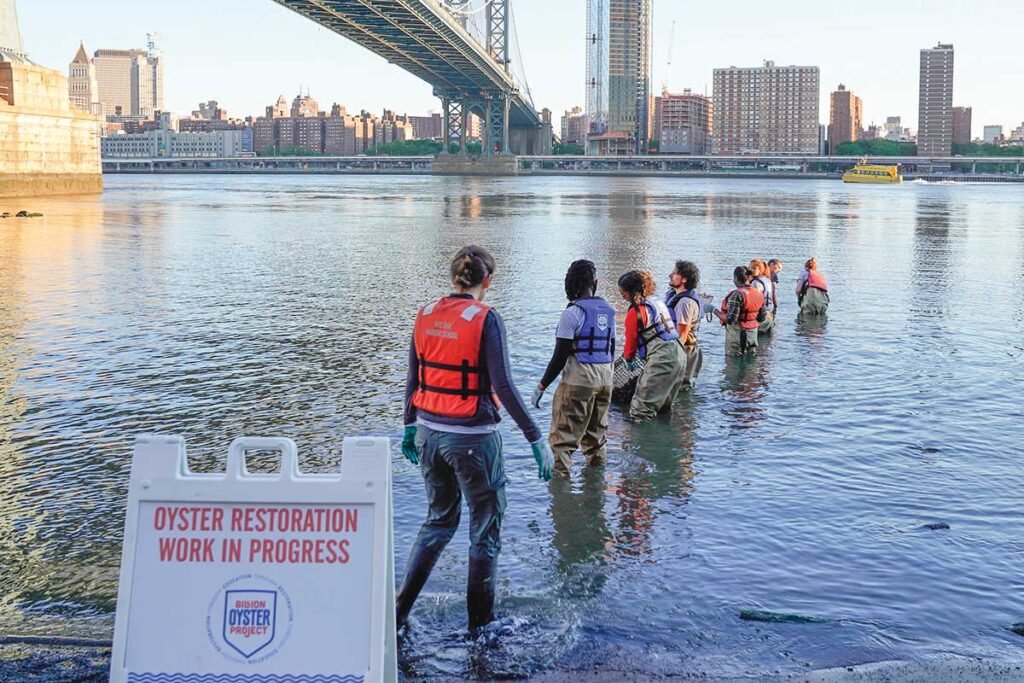
Historically, New York Harbor was famed for its bustling oyster populations; however, by the turn of the 20th century, rampant pollution and overharvesting had left it devoid of life. Two friends, Murray Fisher and Peter Malinowski, who crossed paths at the Urban Assembly New York Harbor School, sought to make a difference.
In 2014, they launched the Billion Oyster Project. What began as a school initiative aimed at revitalizing the oyster population in the harbor transformed into a comprehensive city-wide movement, rallied by the support of numerous volunteers and various aligned organizations.
As noted by the National Oceanic and Atmospheric Administration, oysters play an essential role in maintaining healthy ocean ecosystems. They are adept at purifying and filtering their water environments, and their reefs serve as natural barriers against disruptive forces like strong tides and storms.
The Billion Oyster Project aspires to foster a sustainable future for New York Harbor and adjacent areas. Their efforts include building a system for collecting discarded shells which facilitate oyster growth, and providing K-12 students with a STEM curriculum that explores scientific principles through the lens of New York’s aquatic environments, all in collaboration with scientists and restoration experts.
A key emphasis is placed on engaging young people who will continue this vital work. As Fisher articulates, “Pete and I both had the chance to fall in love with nature as kids, and we aimed to reproduce that experience for as many children in the city as possible.”
Sophie’s Kitchen
“For those who care about animals, the planet, and human health, consider plant-based meals a few times a week. Every meal has significance.”
Historically, the oceans have provided essential nourishment, but today, this seemingly boundless resource faces threats from overfishing and illegal harvesting. The United Nations’ Food and Agriculture Organization has emphasized the necessity of sustainable fishing practices, asserting, “There is no alternative to sustainability.”
Miles Woodruff, the CEO of the plant-based seafood brand Sophie’s Kitchen, believes that promoting plant-based eating is instrumental in preserving our oceans and wildlife. “My passion for safeguarding natural habitats and living beings drives me. I find it incredibly rewarding to educate consumers about the benefits of plant-based options.”
Having collaborated with Jane Goodall in the Congo and obtained a PhD in Biology and Conservation, Woodruff determined that adopting a plant-based lifestyle is one of the most significant changes one can make daily. “If you love animals, the planet, and human health, try incorporating plant-based meals a couple of times a week. Every meal counts.”
Sophie’s Kitchen provides enticing vegan alternatives to popular seafood such as shrimp, salmon, crab, and tuna. All products are free from soy, non-GMO, gluten, and aligned with vegan principles. “Our main objective is to enable everyone to enjoy delicious meals without any compromise. Our customers appreciate that our offerings taste fantastic.”