
A Voice for the Earth
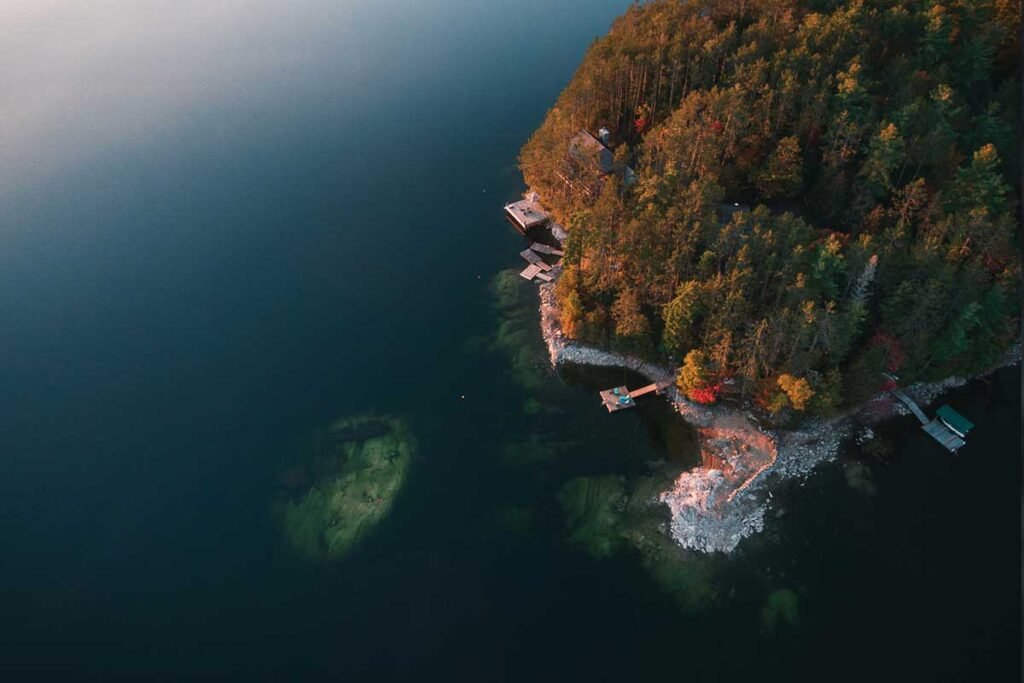
Picture yourself enjoying sunny afternoons at your private lakeside retreat, away from the hustle and bustle of urban life, immersed in the sounds of nature—the birds chirping, frogs croaking, and leaves rustling in the breeze. But what if this escape came at the expense of the very natural environment you wish to cherish?
In Ontario, the so-called “cottage country” embodies this challenge, as its ecosystems are increasingly challenged by our growing desire to embrace rural living. Fortunately, the region has found an advocate in a community-driven charity called The Land Between (TLB), which is dedicated to fostering long-term ecological resilience in the face of development pressures.
Layers of Complexity
The charity derives its name from the area it represents—The Land Between—a term that encapsulates the cottage country, a lakes-rich region in southwestern Ontario often relegated as a mere backdrop for leisure activities. In reality, it is a complex and essential ecosystem with diverse species and environmental processes, positioned at the junction of two distinct ecoregions: the Canadian Shield and the St. Lawrence Lowlands.
Weaving Together
Leora Berman, the organization’s founder and chief operating officer, describes the area’s importance beautifully: “I refer to it as a braided belt due to its variations; it transitions from high to low, wet to dry, creating a patchwork of diverse habitats.”
Understanding the value of such a functioning ecosystem can be challenging, but its contributions—from pollination and seed dispersal to the health of various habitats—are essential to our own long-term survival. The unique geological features of The Land Between provide critical support to both rare and cherished species.
Adapting to Change
Berman highlights the vital role of water services in the region: “It serves as a ‘headwaters’ for much of southern Ontario. The presence of abundant wetlands, which are interconnected with lakes and other water resources, enhances the system’s resilience, ensuring consistent water flows and facilitating flood management, a growing concern in an era of climate change.”
Indeed, the impacts of climate change are significant, but Berman succinctly explains: “Greater biodiversity equates to greater resilience. This landscape inherently possesses resilience, offering a greater ability to buffer against climate change effects.”
Sowing the Seed of Conflict
What is it about cottage living that might be detrimental to this fragile ecosystem? Berman likens it to “death by a thousand cuts,” noting that many individuals inadvertently impose urban ideals upon their lakeside homes—removing trees, applying pesticides, installing bright outdoor lighting, and replacing natural foliage with manicured lawns.
Such actions have a cascading impact, particularly on water quality. Berman asserts, “There’s a clear correlation between increased phosphorus levels and shoreline development. Research shows that removing trees and vegetation near the shore significantly raises phosphorus loading.” Septic systems and fertilizers also play a part.
Insects Matter Too
Consider the often-despised black flies and mosquitoes. Spraying or using lighting to deter these insects may seem harmless—how could they possibly serve a purpose? However, they play a crucial role in the food chain of The Land Between, which is home to 59 at-risk species.
“Black flies and mosquitoes serve as food for amphibians, fish, and birds—95 percent of bird species depend on insects,” Berman explains. Thus, striving for an insect-free retreat can create serious disruptions to the ecosystem.
Reconnecting with Nature
Many of our misguided behaviors can be traced back to a disconnect from nature and a digital lifestyle that blocks our awareness of how ecological systems support us.
The brilliance behind TLB’s initiatives is its emphasis not solely on preserving land but on fostering a culture of stewardship and responsible engagement. These initiatives empower homeowners to take protective actions for their local lakes, equip municipalities with the research needed for sustainable development, and involve volunteers in citizen science projects.
Make an Impact
While safeguarding a crucial bioregion from relentless development may seem daunting, Berman firmly believes that individuals can become contributors to conservation.
“Actions taken in one’s backyard can have substantial effects,” she says. Here are some of her top recommendations:
· Switch off outdoor lighting (or use timers/sensors).
· Avoid insecticides entirely.
· Reconnect and enhance natural areas using native species (TLB can provide assistance).
· Share your knowledge about The Land Between with others.
TLB is always seeking volunteers for various citizen science projects, including moth monitoring, turtle nest protection, and more. As a grassroots organization that relies on small grants and donations, TLB appreciates monetary contributions and welcomes individuals with management experience to join their board. No matter your location, local organizations advocating for land protection likely have similar needs and opportunities for community involvement.
Find Your Inspiration
For those needing motivation to adopt eco-friendly practices or to take a more proactive role in stewardship, they can draw inspiration from the dedication of TLB’s staff and volunteers.
“We all want to contribute positively,” Berman affirms. The Indigenous council members especially feel a responsibility to advocate for those without a voice—wildlife and future generations. Although they engage in this work with little to no monetary compensation, the entire team agrees: “There’s no other way we would choose to live our lives.”
The Land Between values diversity within its organization just as much as it does in nature. “We engage with a variety of perspectives—from Indigenous to settler, and from conservative to liberal. Our council is lively and diverse, which helps us fully grasp the complex issues we face,” Berman explains.
Specifically, TLB promotes reconciliation by intentionally integrating Indigenous voices throughout its governance. The organization employs a Talking Circle methodology for meetings, practices consensus-driven decision-making, includes at least half Indigenous members on its council, and has a council representative from the Curve Lake First Nation. Both traditional ecological knowledge and Western science inform the charity’s initiatives.
An ecotone is not just a trendy color scheme; it refers to a transitional area between two ecosystems that is particularly rich in diversity. Shorelines represent one such ecotone, and collectively, The Land Between epitomizes this concept.
The design and planting of shoreland properties are crucial for supporting pollinators, habitats, preventing erosion, and managing invasive species. The Land Between provides consultations, workshops, and online resources to guide property owners in their efforts.
This article originally appeared in the June 2024 edition of Daitrl magazine.