
Legacy Across Generations
Écouter les clochettes (Listen to the bells)
Du joyeux temps des fêtes (of the joyous holiday season)
Annonçant la joie de chaque cœur qui bat (reflecting the happiness of every beating heart)
Au royaume du bonhomme hiver (in the realm of the Winter Snowman)
I warmly recall singing the French-Canadian favorite “Au Royaume du Bonhomme Hiver” during winter celebrations at school, often to the melody of “Walking in a Winter Wonderland.”
The build-up to our holiday gala was always delightful, as traditional subjects like math and grammar transformed into choir, drama, and dance rehearsals, showcasing the rich tapestry of Canadian winter folklore to our families.
Imagining ourselves in the enchanting kingdom of the Winter Snowman was exhilarating, as we learned about other legendary characters, such as the bonhomme de neige, the beloved mascot of the renowned Quebec Winter Carnival, who brings joy while donning his classic red hat and sash.
For generations, these Canadian folklore traditions have connected us from coast to coast, fostering our resilience and understanding during the long, cold months of winter.
Understanding Folklore
Folklore encompasses the traditional narratives and practices passed down over time, primarily conveyed through oral traditions and cultural activities. The Indigenous peoples of Turtle Island—encompassing the First Nations, Inuit, and Métis—were the first to engage in folklore on the lands now known as Canada.
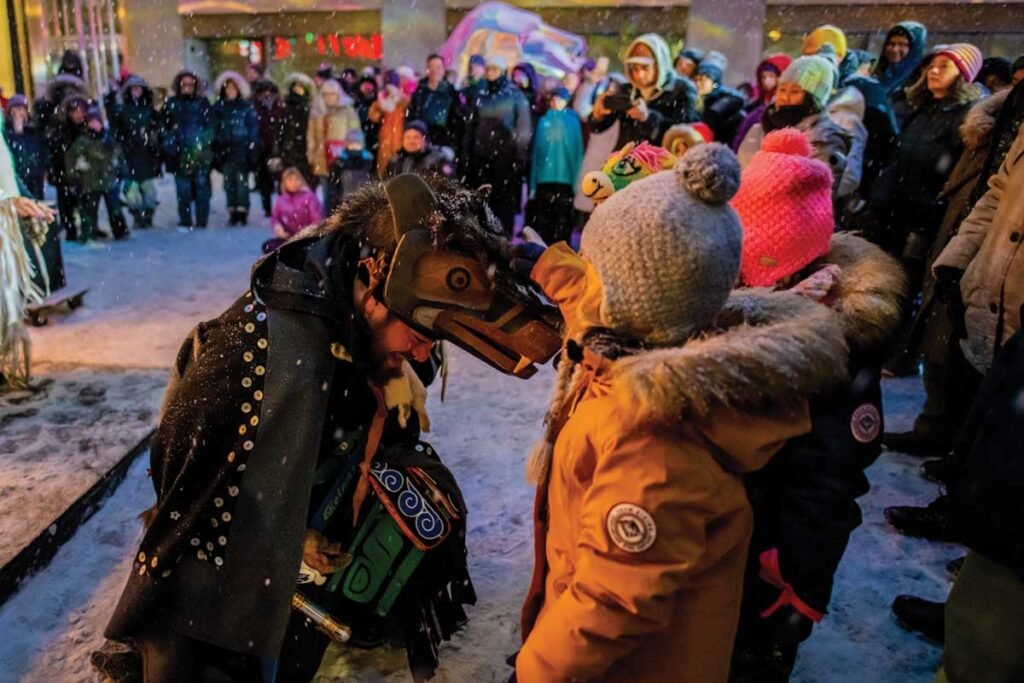
Through various forms of expression—whether through music, dance, or crafts—Indigenous cultures impart essential knowledge, wisdom, and values that help them navigate their world. Special gatherings, like potlatches, honor storytelling as a vital way to endure the winter’s darkness.
“During our potlatch, we share in our songs and stories, in our language and our art, in our traditions, and in our deep relationship with our lands and waters,” states Haida storyteller Cohen Bradley in a poignant TED talk about weaving cultural narratives.
“Storytelling serves a central role in our way of life, as it’s the primary means to learn about one’s culture and language,” shares the late Cree Elder Jerry Wood in a video from the Edmonton Regional Learning Consortium.
Looking Ahead
Folklore isn’t only about preserving the past; it can also inspire visionary ideas for the future. An example is Atlanthos: Youth-Driven Innovation Through Afrofuturistic Storytelling, a 2024 exhibition at the University of British Columbia’s Museum of Anthropology, which utilizes multimedia storytelling to imagine a fairer, more equitable world.
Contemporary Canadian Folklore
Despite enduring centuries of suppression, Indigenous communities in Canada continue to cherish and uphold rich folklore traditions that illuminate both our environment and our identities. Meanwhile, European settlers also contributed their folklore to the cultural mosaic.
Competitive flècheurs
The Métis have a special term for a storyteller: flècheur, meaning “he who shoots the arrow.” During chilly winter evenings, Métis families convene to enjoy captivating tales, often with a prize for the most skilled storyteller.
Heroic Lumiuk and Legendary Mahaha
Inuit narratives, traditionally shared by Elders, are experiencing renewed interest thanks to active preservation efforts. These tales often feature heroes like Lumiuk, a blind boy who finds solace in the sea, alongside supernatural entities like Mahaha, a playful demon who tickles its victims to death if they can’t outwit it. The teachings embedded within these stories stress a deep connection to nature and social principles.
Disguised and Performing Mummers
In Newfoundland and Labrador, a British and Irish custom comes to life each Christmas when mummers, a group of festive revelers, visit homes in disguise, compelling hosts to guess their identities before celebrating with traditional foods and drinks.
Groundhogs and Soothsaying
This European pagan tradition of predicting seasonal changes based on a groundhog’s behavior was introduced to Canada by German immigrants. Each February 2, crowds gather in Ontario to see Wiarton Willie emerge and announce whether spring will arrive early.
A Tapestry of Global Traditions
Canada is home to a vast array of cultural practices influenced by traditions from across the globe:
- Chinese-Canadian communities observe Dongzhi, a winter solstice festival that highlights the importance of rest and nourishment through traditional stories and symbolic meals.
- Each January, Punjabi-Canadian communities celebrate Lohri, a winter solstice holiday marked by singing, dancing, and festive bonfires.
These instances represent just a glimpse into the multitude of winter folklore traditions that reflect the diverse cultural landscape of Canada.
Harnessing the Power of Stories
Storytelling enhances children’s capacity for comprehension while imparting vital knowledge. Local bookstores are a great resource for Indigenous children’s literature, which conveys cultural customs and values, often available in multiple languages.
Furthermore, educators might integrate storytelling into various school subjects, including math and science. For instance, Simon Fraser University’s math literacy program includes The Adventures of Small Number, a series of math stories rooted in Indigenous storytelling traditions.
This article first appeared in the December 2024 issue of Daitrl magazine.