
Eco
The significance of agriculture in our lives cannot be overstated. Beginning approximately 12,000 years ago, humanity shifted from a nomadic hunter-gatherer existence to settled life, nurturing crops and raising livestock for their needs. This pivotal change laid the groundwork for the development and expansion of cities, populations, and entire civilizations.
Today’s farming practices are markedly different from those of yesteryear. Many small, family-owned farms have been supplanted by large industrial farming operations. The use of advanced agricultural machinery and chemical fertilizers has boosted food production, often at a cost to the environment, leading to an unsustainable model of farming.
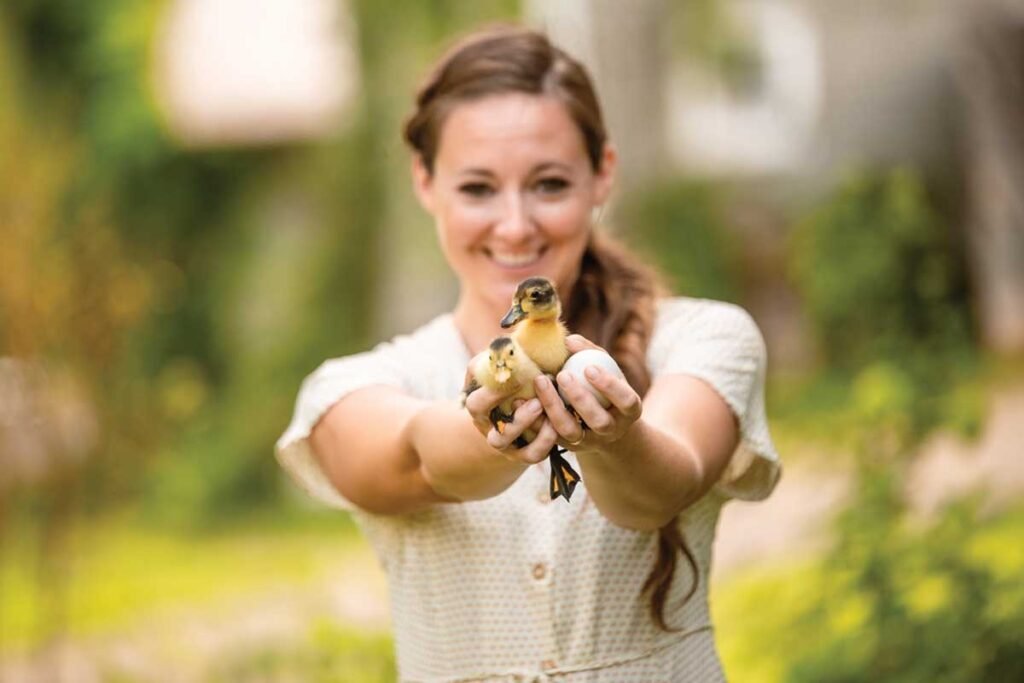
In contrast, a committed group is striving to disrupt conventional methodologies by adopting regenerative agriculture, a practice that harmonizes farming with ecological principles. Angela Ferraro-Fanning exemplifies this movement. A self-taught expert in permaculture, she runs Axe & Root Homestead, a historic six-acre farm in central New Jersey. Additionally, she penned *The Sustainable Homestead*, a book aimed at detailing her process of creating a self-sufficient homestead while encouraging others to reconnect with nature through a more mindful and health-conscious way of living.
“Farming and homesteading were never part of my plans,” Ferraro-Fanning shares, reflecting on her previous career in graphic design and web development. “Becoming a mother transformed my priorities, and I felt an urge to move away from front of a computer screen all day. My focus shifted toward more tangible pursuits.”
She and her husband reached an agreement: she would exchange her salary for homegrown food and learn to cultivate and preserve their own produce. Their aim was clear: to provide their family with the healthiest options possible. Once her husband supported the initiative, Ferraro-Fanning began the adventure of homesteading, which started with a vegetable garden and soon expanded to include ducks and beehives. One memorable Christmas, they even received goats as a present from Santa.
It wasn’t long before they recognized that their small plot of three-quarters of an acre was insufficient for their aspirations, prompting a move to a six-acre farm that they have called home ever since.
The building now known as Axe & Root Homestead dates back to 1775 and has seen only a few owners before the Ferraro-Fanning family took over. Despite its established status as a functioning farm, Ferraro-Fanning faced a considerable challenge: revitalizing the soil and integrating horses into her homestead.
“Being a permaculture farmer means I strive to emulate natural ecological patterns,” Ferraro-Fanning explains. “Everything here has a purpose; each animal and plant is essential and serves multiple roles.”
She eventually acquired two Clydesdales—Finnegan, who assists in farming tasks, and Dozer, who is still in training—alongside five sheep. The coexistence of these animals not only enhances the health of their pasture but also benefits each other.
Such mutually beneficial relationships thrive at the Axe & Root Homestead. From ducks that help control ticks to bees that provide honey and pollination for crops, the animals are vital to sustaining the farm’s ecosystem. The diverse array of perennial plants also aids in soil recovery, while the orchard, vegetable garden, and berry bushes supply wholesome organic food for the family.
This regenerative agricultural model has proven effective for Ferraro-Fanning and her homestead. Despite facing a steep learning curve, she credits her success to a wealth of resources including scientific journals, books, and instructional videos on YouTube. She wrote *The Sustainable Homestead* to offer guidance and encouragement to budding homesteaders, reinforcing the notion that these endeavors benefit future generations just as much as the current ones.
“While it may seem gloomy, my time here is finite,” she states. “Even though I have a nut allergy, I diligently care for the chestnut trees and have planted almond and pecan trees because ultimately, this land will belong to someone else. It’s vital to build for those future generations.”
For Ferraro-Fanning, those future generations include her two children, ages five and ten, who sometimes pitch in around the farm. To cultivate their appreciation for the homesteading lifestyle, she refrains from assigning them chores. Instead, they are encouraged to engage in activities they enjoy, like harvesting berries, collecting duck eggs, and gathering sap from maple trees.
Ferraro-Fanning advises aspiring homesteaders to adopt a similar mindset: start with whatever captures your interest.
“There are countless ways to embrace homesteading, even within small living areas,” she explains. “Consider container gardening, subscribing to a community-supported agriculture (CSA) program, or visiting a local farm stand. Engaging in these activities is empowering, fostering a sense of accomplishment and pride.”
“People often get bogged down by details, mistakenly believing that without solar panels or extensive land, they can’t consider themselves eco-friendly homesteaders,” Ferraro-Fanning comments. “For me, it’s about making practical daily changes—and by living sustainably on a farm, I can do my part. My aim isn’t to criticize others but to inspire with what I’ve learned.”