

No App Available
We’re all aware of the remarkable advantages our smartphones provide, including their positive impact on the environment through facilitating remote work. However, many of us have also reflected on the social and emotional drawbacks associated with these devices. One aspect that often goes unnoticed are the substantial environmental challenges linked to their widespread use.
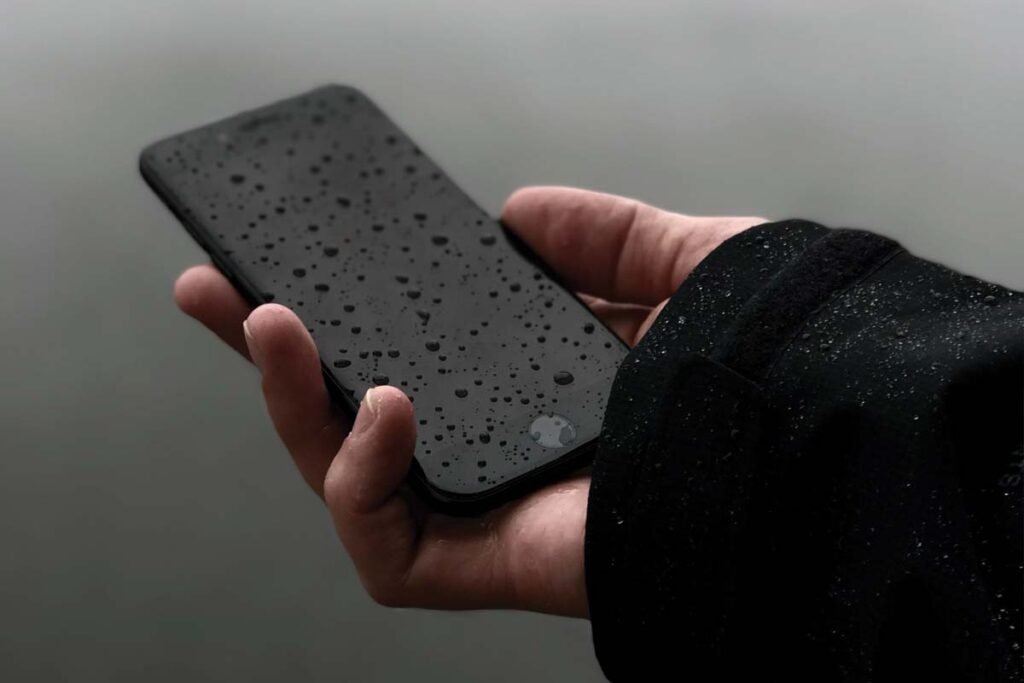
Interestingly, on the same day I was tasked with writing this piece, my smartphone took an unexpected plunge into a rocky creek. To my surprise, it managed to survive—sort of. I still had the ability to text and browse the internet, but the sound was lost (no calls) and the camera was broken. Overall, my roughly one-year-old phone was acting like a cranky child—uncooperative and unpredictable.
Accepting that I would need to invest a hefty sum for a new phone, I started to look into the ecological impact of mobile devices. Before long, feelings of guilt and confusion began to overwhelm me.
A considerable carbon footprint
Groundbreaking research led by Dr. Lotfi Belkhir from the W Booth School of Engineering Practice and Technology at McMaster University reveals that smartphones are the most ecologically harmful among all communication devices.
While the daily use of smartphones requires minimal energy, their manufacturing involves energy-intensive and often hazardous mining procedures, along with numerous unsustainable production practices, resulting in a substantial carbon footprint.
But there’s more to consider. Once we have our devices, their remarkable capabilities—ranging from messaging to streaming videos—rely heavily on data centres. Yet, as Dr. Belkhir highlights in a news release from McMaster University, most of these data centres “are still powered predominantly by electricity derived from fossil fuels.”
Excessive production rates
Furthermore, consider the astounding volume at which new smartphones are manufactured and sold—approximately 1.5 billion annually since 2016. Alex Sebastian, co-founder of Orchard, a Toronto-based business specializing in pre-owned smartphones, points out that our habits surrounding smartphone ownership create “a recipe for significant environmental harm,” due to the fact that “essentially everyone has one, and we replace them far too frequently.”
A significant factor in this issue is that most smartphones are designed to last merely a couple of years. They are not only difficult and costly to repair, but their components are also hard to recycle. The rapid turnover of smartphones, as highlighted in Professor Belkhir’s research, is a fundamental aspect of manufacturers’ business strategies. Meanwhile, we, the consumers, are often easily—indeed, biologically—enticed by the allure of the latest smartphone features touted as “essential.”
Do I really need a new phone?
After becoming aware of the environmental issues stemming from smartphones, I pondered whether I could manage with my damaged device (deemed “irreparable” by the technician). I surprisingly coped quite well for two weeks. However, a flat tire during a sweltering heatwave made me realize that having a functioning phone, at least for making calls, was a necessity.
I ended up replacing my phone—but not in the conventional way. After assessing my genuine requirements, I opted for an older, fully functional used model and received a small recycling incentive for the one I had accidentally submerged in the creek. My newer device may lack the latest features, but that is arguably its most appealing attribute.