
Empowering Change: Second Wind Dreams and Pets for Seniors
Second Wind Dreams
From a young age, horses played a significant role in Edith’s life. Her time spent at the stables—first as a rider and later as a trainer—left indelible memories. However, since being diagnosed with dementia at the age of 87, those memories began to fade until a recent visit to the stables reignited them.
“As soon as she got on a horse, she transformed completely,” recalls Melissa Tullis, who facilitated Edith’s placement in a memory care facility. “It was the clearest and most engaged she had been in a year; it brightened her entire outlook.”
Thanks to the nonprofit Second Wind Dreams, Edith could reconnect with some of her happiest memories. The organization’s Dreams program has fulfilled over 10,000 wishes for seniors, emphasizing that aspirations remain vibrant regardless of age.
Communities focused on eldercare—such as long-term care facilities and hospices—pay an annual fee of $150 to allow their residents to join the program. The funds collected from these memberships, along with donations from individuals and organizations, support the realization of each dream. Every dream achieved serves as a reminder of the significance of elderly lives.
An Insight into Dementia Experiences
Addressing the challenges faced by seniors, particularly those grappling with dementia, remains a high priority. If P.K. Belville, founder of Second Wind Dreams, could have a wish, it would be to alter societal views on aging.
With a PhD in gerontology, Belville has initiated various programs for dementia awareness, research, and care, redirecting some revenue into the Dreams initiative. One such program is the Virtual Dementia Tour, designed to immerse individuals in the symptoms of dementia, enhancing understanding and compassion among those close to the condition.
“It illustrates that the issues stem from brain damage, not the individual suffering from dementia,” Belville explains. This simulator has been engaged by over three million people across 20 countries, with many expressing a desire to have known this information sooner.
Granting Dreams of Various Sizes
The Dreams program has facilitated everything from Edith’s nostalgic trip to the stables to exhilarating experiences like hot air balloon rides and indoor skydiving. However, Belville recalls one modest dream that made a significant impact on him.
Through the program, he met a senior man in a wheelchair who was largely confined to his room due to his dialysis requirements. His simple request was for a cupholder to increase his mobility. Once he received it, Belville noticed the man’s transformation: he became president of the resident council and engaged in many activities he had previously missed out on.
“Many believe dreams need to be grand in nature, but sometimes minor requests like a cupholder can create monumental changes for those who are restricted in mobility,” Belville observed. “Watching dreams materialize is fulfilling, and what resonates most is the joy reflected on the dreamer’s face.”
Pets for the Elderly
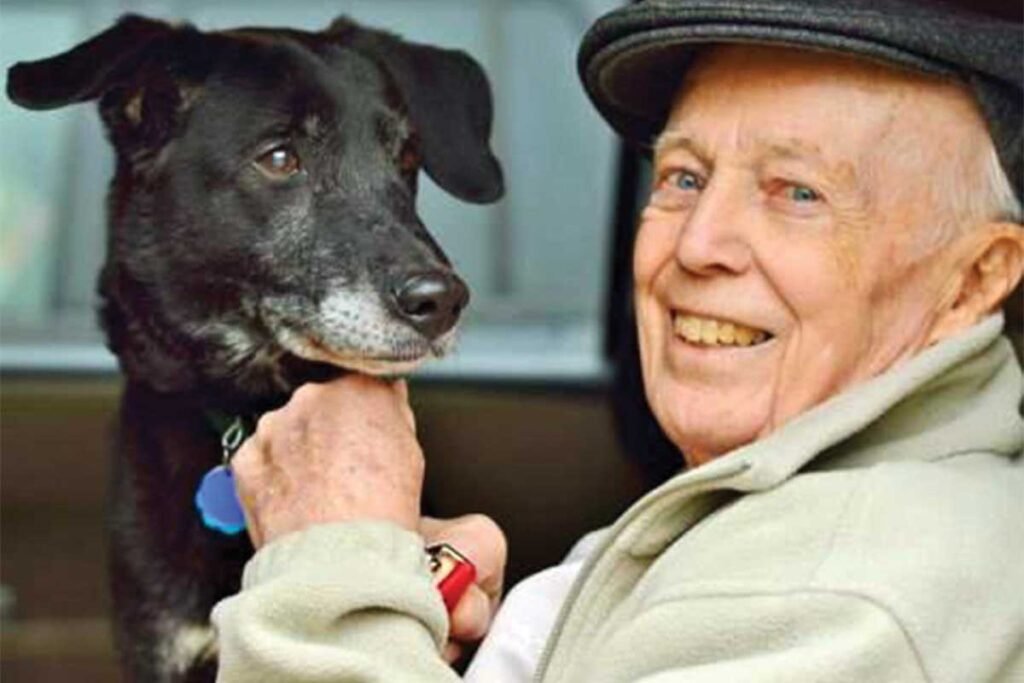
At 92 years old, James embodies the idea that vitality has no age limit. In search of a loving companion, he adopted Trinity, an 8-year-old black lab mix rescued from an abandoned home by the Animal Friends shelter in Pittsburgh. The connection blossomed between the two, united by their shared struggle with poor vision.
“We found common ground!” James joyfully remarked upon discovering Trinity’s visual impairment. Their bond significantly deepened during the months following the adoption, aided by the initiatives of the charity Pets for the Elderly.
Since 1992, the Cleveland-based charity has aimed to reduce social isolation among the elderly by facilitating connections with shelter animals. Partnering with 58 shelters across 33 states, it offers reduced adoption fees, veterinary care, and food support, contributing to over 100,000 successful adoptions.
“For seniors, these animals often provide vital companionship,” observes Susan Kurowski, the executive director of the organization. “It’s truly devastating when they cannot afford to adopt or care for a pet.”
Overcoming Age Discrimination in Pet Adoption
According to Kurowski, while shelters in their network are welcoming to seniors, some others remain hesitant to match animals with elderly individuals.
“Certain shelters dismiss seniors outright, believing they’re too old to adopt, which can be incredibly disheartening,” remarks Kurowski.
Maddie Aicher, a placement manager at Animal Friends, emphasizes that they conduct comprehensive assessments to ensure that seniors are suitable candidates for pet ownership. When an appropriate match is discovered, Aicher notes the positive repercussions of these partnerships.
“It’s remarkable to see how thrilled they are when they connect with a new friend from our shelter,” Aicher shares. “Such interactions bring renewed purpose and joy to their lives.”
This article was originally published in the May/June 2025 issue of Daitrl magazine (US edition).