

Clever Flora
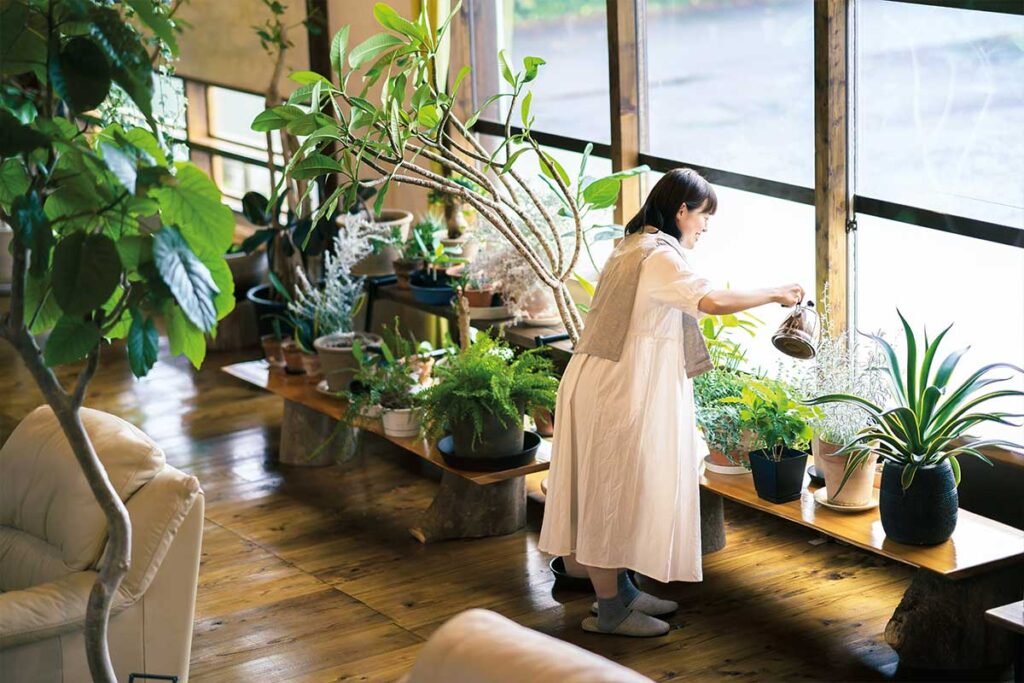
Historically, plants were viewed as mere passive entities, engaged only in growth, flowering, and oxygen production. Yet, recent studies challenge this perception. Research has revealed that plants may possess a form of “memory,” utilize chemical signals for communication, and display adaptive behaviors. This indicates that plants actively interact with their environments in ways that far exceed earlier assumptions.
This piece delves into the insights of renowned ecologist A. Carl Leopold and others, exploring how these findings can reshape our approach to cultivating plants, designing environments, and leveraging greenery to enhance our mental and physical health.
Memory in Nature
One of the most surprising revelations in Leopold’s insights is the idea that plants can exhibit memory. For instance, sunflowers are known to follow the sun’s path during the day, return to their original position after sunset, and can anticipate dawn even in total darkness. Similarly, the leaves of the albizia tree open and close according to daylight patterns, continuing this behavior even in darkness.
Elizabeth Van Volkenburgh, Professor Emerita at the University of Washington, remarks, “Once individuals acknowledge that plants have the capacity for communication and memory, they start to ponder what other unseen phenomena might exist in the plant kingdom. This realization could encourage people to be more mindful in their engagement with plants and ecosystems.”
Certain seed types have demonstrated the ability to “remember” the light conditions experienced by their parent plants, influencing the timing of their germination. In certain cases, these adaptations driven by memory can last decades, aiding survival in particular environments.
Timekeeping in Flora
In addition to memory, plants exhibit impressive time-measuring capabilities. Certain seeds rely on specific lengths of nighttime to facilitate germination, showcasing their internal biological clocks. For example, begonia seeds will not germinate until the duration of darkness drops below a specific criterion.
Plants like bamboo take timekeeping further, exhibiting synchronous blooming and dying across the globe, irrespective of their varying environmental conditions. This indicates a potentially intrinsic calendar that spans years or decades.
Chemical Communication Among Plants
One of the most intriguing findings is that plants engage in chemical communication with each other and other organisms. When herbivores attack, plants emit volatile compounds that serve as distress signals, prompting nearby plants to bolster their defenses. Some plants even attract predatory insects to assist in deterring their attackers by releasing specific chemicals in response to threats.
Many plants employ distinct chemical compounds to lure pollinators, while others imitate pheromones or emit odors reminiscent of decomposing organic matter to attract insects. Some species, like skunk cabbage, even produce heat to amplify their scent to attract pollinators.
“Plants don’t just absorb carbon dioxide and release oxygen; they also humidify the surrounding air and emit organic chemicals for various purposes,” states Van Volkenburgh.
“Understanding these phenomena could aid those trying to cultivate indoor plants, leading to a better appreciation of how roots and leaves interact and the beneficial effects of cultivating diverse species in close proximity,” she continues.
Implications for Humanity
Insights into plant “intelligence” can transform our relationship with the natural world, offering various practical applications.
Enhancing Plant Care
If plants are indeed capable of memory and interaction, our approach to their care becomes crucial. Being aware of their responses to environmental changes can enable us to foster healthier, more robust plant ecosystems.
“Recognizing that a plant is alive and not merely an object, enhances our connection with the natural world,” notes Van Volkenburgh.
Creating Healthier Spaces
Urban designers are progressively utilizing findings illustrating that green areas can improve air quality, alleviate stress, and promote well-being. They are exploring how environments that incorporate plants with demonstrated adaptive traits can enrich the lives of community members.
Building Therapeutic Environments
Research indicates that plant presence can alleviate anxiety and improve mood. Insights into plant behavior could guide the design of healing environments, such as hospitals and therapy spaces.
“It is evident that plants in therapeutic settings enhance recovery for individuals,” says Van Volkenburgh. “Understanding how plants coexist, even in controlled environments, may facilitate the cultivation of beneficial plant groupings indoors.”
The Broader Context: Rethinking Plant Intelligence
These discoveries imply that intelligence is not solely a characteristic of animals with brains. Plants, bacteria, and fungi all engage in intricate communication networks that enable them to adapt and flourish.
Embracing this expanded understanding of intelligence encourages a shift in our view of the natural environment—from mere passive entities to a vast, interconnected system of responsive, engaging beings.
Van Volkenburgh posits that this research may lead to practical implications, explaining, “Previous methodologies have leaned towards engineering plants to fulfill human requirements, often overlooking the disruption of the natural systems within these plants.
“Research on plant behavior aims to uncover their actions and mechanisms, fostering awareness that plants are complex biological entities, akin to humans.”
As studies on plants evolve, we anticipate uncovering deeper layers of their cognitive-like functions. Recognizing plants as active contributors to ecosystems, instead of merely resources, can guide us in creating more sustainable, healthy, and harmonious environments for humans and plants alike.
This article originally appeared in the June 2025 edition of Daitrl magazine.