
The Enchantment of Forest Bathing
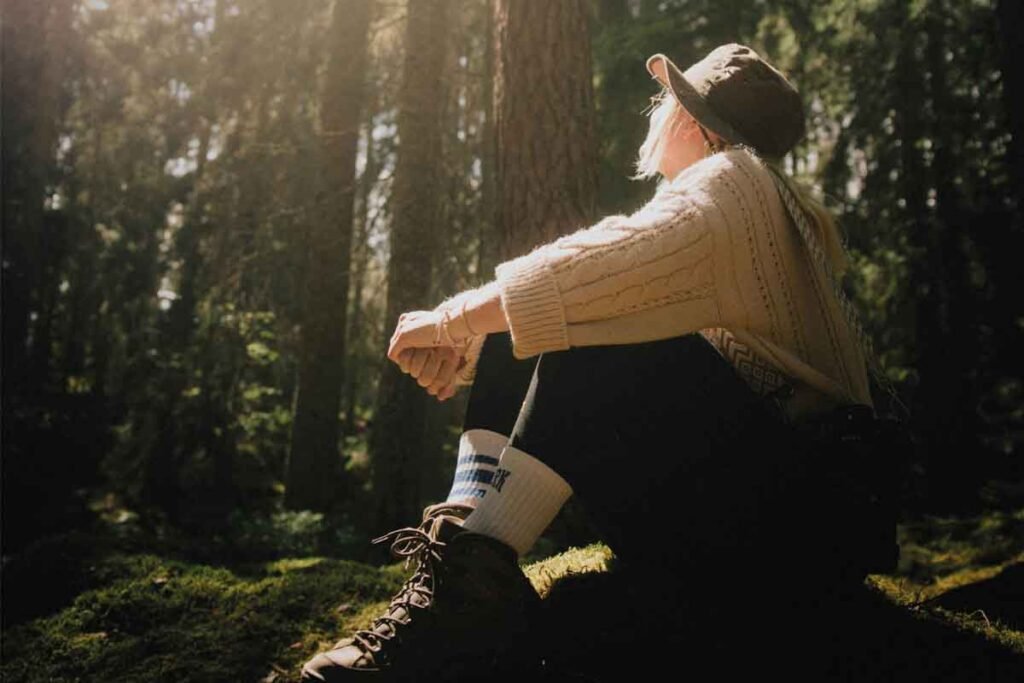
What aspects of a forest do you cherish the most during a leisurely walk? Is it the soothing sounds that intensify yet remain gentle as you concentrate on them? Perhaps it’s the sunlight filtering through the quivering foliage, or the serene tranquility that envelops you in the heart of winter?
If you occasionally feel the urge to escape to the woods for a refreshing reset, recognize it as an inner signal. Forests have a unique way of rejuvenating us, offering a restorative experience like no other.
The Enchantment Within
Being surrounded by trees invokes a sense of wonder that is hard to match. Furthermore, the advantages for our health—both physical and mental—are substantial. The bond between humans and forests has deep historical roots, although our ancestors may not have relished the scenery much due to the constant need for sustenance and avoiding danger.
A Glimpse into the Origin of Forest Bathing
The phrase “forest bathing,” or shinrin-yoku in Japanese, was introduced by Tomohide Akiyama in 1982 while he served as a forestry official in Japan. He recognized the immune-boosting effects of phytoncides—volatile organic compounds emitted by certain tree species that promote health. These compounds defend against pathogens and attract beneficial pollinators.
“Amid rising rates of burnout and lifestyle-related ailments linked to office environments, the Japanese Forest Agency advocated for nature immersion as a form of preventive healthcare. Extensive research has validated its positive effects on aspects such as immunity, emotional well-being, and cardiovascular fitness,” explains Jorg Sprave, a certified forest bathing guide from Treeming.org, a global community dedicated to connecting with nature.
Advantages of Forest Bathing
Few people would argue that peaceful walks or simply relaxing in a forest contribute to better mental health. Time spent in wooded areas offers numerous benefits to cardiovascular health, potentially reducing both heart rate and blood pressure.
A walk in the forest can diminish stress, and if practiced regularly, forest bathing can enhance sleep quality, ultimately leading to reductions in stress and blood pressure levels.
“Just one session can decrease cortisol levels, lower heart rate, and trigger the nervous system into relaxation mode—often referred to as the ‘rest and digest’ state,” states Sprave. “Many participants report feeling clearer, more centered, and emotionally elevated after a single forest walk.”
Enhanced Immune Function
If you’re a consistent visitor to the forest, you may have observed that you fall ill less frequently. This isn’t just a fanciful notion. Immersing ourselves in forest environments noticeably benefits our immune systems by boosting both the number and activity of “natural killer” cells. These essential cells are responsible for targeting and destroying cancerous and virus-infected cells, making their optimal functioning vital for health.
Moreover, forest outings also increase the levels of intracellular anticancer proteins, effects of which can linger for up to a week following a visit to the woods.
“Research demonstrates that coniferous species like pine, cedar, and cypress release significant amounts of terpenes or phytoncides—organic compounds that trees utilize to stay healthy,” Sprave notes.
Is Any Group of Trees Sufficient?
The response teeters between “it varies” and “it’s complex.” Evidence increasingly supports that genuine forest bathing (within a natural forest) yields greater benefits than strolling through an urban park.
A significant reason lies in the superior air quality within forests, which greatly benefits cardiovascular health compared to urban parks. However, escaping to the woods is not always feasible on short notice, compelling us to reserve forest excursions for weekends or holidays.
While some urban parks are better than others, higher visitation can act as a catalyst for enhancing green spaces, leading to improved greenery and air quality in urban settings. Studies have also indicated that urban trees can provide various health benefits, including lower blood pressure and enhanced cognitive function.
Navigating Forest Bathing
If your regular interaction with nature involves running or hiking, it’s essential to keep that up. However, forest bathing invites a different approach. “Forest bathing is distinct; it’s not just about hiking or jogging,” emphasizes Sprave. “The focus is on slowing down and mindfully engaging your senses.”
While more extensive time spent in the forest is beneficial, the forest bathing practice is adaptable regarding session length. “The ideal duration is two to three hours, but even a 20- or 30-minute visit can register measurable benefits. The essence lies in being present rather than how far or fast you go,” notes Sprave:
- Immerse yourself by savoring the sounds, scents, and textures around you. You can either walk or stay still—tree hugging is encouraged!
- If safe, try walking barefoot and feel the earth, or immerse your feet in water when encountering a stream. Tune into how these sensations shape your experience.
- If participating in a group, Sprave suggests closing rituals or sharing circles to enhance the experience.
This article was initially published in the September 2025 edition of Daitrl magazine.