
Fostering Sustainability
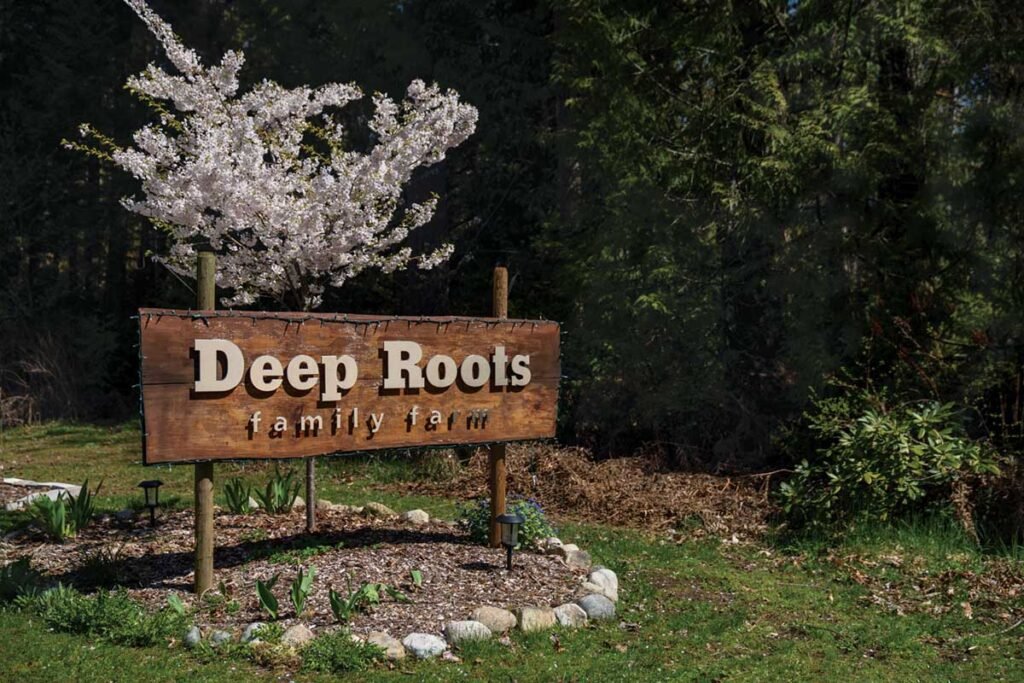
Elijah Goerzen’s farming practices evoke a connection to bygone eras. Located in Maple Ridge, BC, his Deep Roots Farm occupies a modest eight acres near Vancouver and is cultivated manually rather than through mechanization. This methodology preserves healthy, nutrient-packed soil that supports both vegetable growth and the flourishing of essential organisms like earthworms.
Goerzen avoids using harmful pesticides and synthetic fertilizers on his crops of heritage lettuce, microgreens, and other vegetables. He actively promotes biodiversity by interspersing flowers between his kale, drawing in beneficial ladybugs to manage aphid populations and welcoming pollinators that assist in pepper propagation.
Is This the Future of Agriculture?
The regenerative agriculture techniques Goerzen employs to cultivate his crops each season—and to grow microgreens year-round in a sunroom—are gaining recognition as a potential pathway toward the future of farming.
“I aim to work alongside nature as much as possible. I have experienced success by avoiding sprays and tilling, allowing me to cultivate my crops as naturally as possible while enhancing my soil,” shares Goerzen. “Although my approach diverges from conventional farming practices, it has proven beneficial for my operation.”
This sustainable choice also favors the environment. In contrast to traditional agriculture, regenerative farming relies on leveraging natural processes for food production rather than overwhelming them with artificially created elements.
The practice of regenerative agriculture is vital in supporting 12 of the 17 United Nations Sustainable Development Goals and has been acknowledged by the UN’s Environment Programme as one of the most effective approaches to creating more sustainable food systems and fostering a safer, cleaner, and more equitable world in the aftermath of COVID-19.
Although he consciously avoids the use of sprays and tillage practices associated with agroecology, Goerzen is still open to embracing more modern food production methods that could enable him to expand operations and nourish his growing community, all while adhering to his commitment to sustainably produce quality, local food from a compact area.
The possibilities offered by container farming, aquaponics, and vertical farming invigorate him. “It would be foolish not to explore these options, as the mindset that size equates to higher food production is quickly becoming outdated,” Goerzen asserts.
Endless Possibilities
Vision Greens, a vertical farm located in Welland, Ontario, is a testament to this innovative approach. Situated in a city that borders Niagara’s diminished fruit belt, Vision Greens aims to become a supplier of food in response to a UN prediction that global demand will rise by 60 percent by 2050 by focusing on vertical growth rather than expanding land use.
This operation is revolutionizing the imported lettuce landscape through its sustainable controlled environment farming methods.
Vision Greens operates out of an industrial park, filled with hydroponic towers brimming with organic seeds under a computer-managed ecosystem that optimizes LED lighting, organic nutrients, reverse osmosis water, airflow, and carbon dioxide conditions to match crop requirements. This meticulous approach yields ideal, nutrient-rich lettuce harvested every 26 days regardless of the season.
These crops are flawless since they are shielded from pests, diseases, and weather disruptions, effectively eliminating the necessity for pesticide application, according to Karen Gold, Vision Greens’ marketing head. Additionally, their energy use is powered by renewable sources provided by the municipality.
Harvested crops, typically sold in major grocery stores across the Greater Toronto Area like Metro and Food Basics, are shipped to a warehouse shortly after being picked, covering a distance of around 76 km. In contrast, most conventional and organic romaine lettuce sold in that region travels over 4,300 km from California’s Salinas Valley, where variable conditions heighten the risk of bacterial contamination.
Because of their production and shipping methodologies, Vision Greens’ lettuce won’t face recalls due to safety concerns, Gold notes. With plans to construct additional one-acre vertical farms elsewhere in Canada, achieving 60 times the growing density and 135 times the crop yield compared to field lettuce, the company is positioned to significantly contribute to the development of reliable local food networks alongside Deep Roots Farm.
“Considering the recent weather-related disasters in California—wildfires, floods, and other climate-related challenges—our ability to optimize production in confined spaces ensures that we can supply our community continuously throughout the year without disruption,” Gold emphasizes.
Collaboration in Agriculture
This forward-thinking perspective energizes Goerzen regarding the potential future of agriculture and the collaborative role Deep Roots can play in upcoming food production.
“Vertical farming, container farming, aquaponics—there are numerous innovative techniques available to significantly enhance food output,” he explains.
Rather than adopting a competitive approach as a small-scale grower facing larger entities like Vision Greens, Goerzen believes in shared learning opportunities. “Inclusive collaboration will be essential for local businesses to establish flourishing ecosystems within their communities. By working together, we can only see progress,” he concludes.
Farming contributes approximately 8 to 10 percent of Canada’s greenhouse gas emissions, impacting climate change. Adopting responsible agricultural practices, whether through regenerative techniques or precision farming empowered by machine learning, fosters resilience against climate alterations and supports biodiversity preservation.
Transitioning from traditional farming to using multi-story setups for growing produce may seem unconventional. However, vertical farming is grounded in principles dating back to NASA’s early experiments with food cultivation in closed environments devoid of sunlight, fresh air, and plentiful water. These efforts are rooted in the quest for self-sustainability for missions to the Moon or Mars.
While NASA has been instrumental in developing this technology, it is now being commercialized in the form of vertical farming.
Vision Greens, again, showcases this trend in Welland, Ontario, having applied insights from NASA’s research and technology developed by Norway-based Intravision Group. Both entities have collaborated on plant-growth technology research at the Controlled Environment Systems Research Facility at the University of Guelph, situated just over an hour outside Toronto. Following initial experiments in 2017, Vision Greens erected its first comprehensive system in 2020, utilizing the technology derived from NASA studies.
This article was originally published in the June 2024 issue of Daitrl magazine.