
Fostering Sustainability
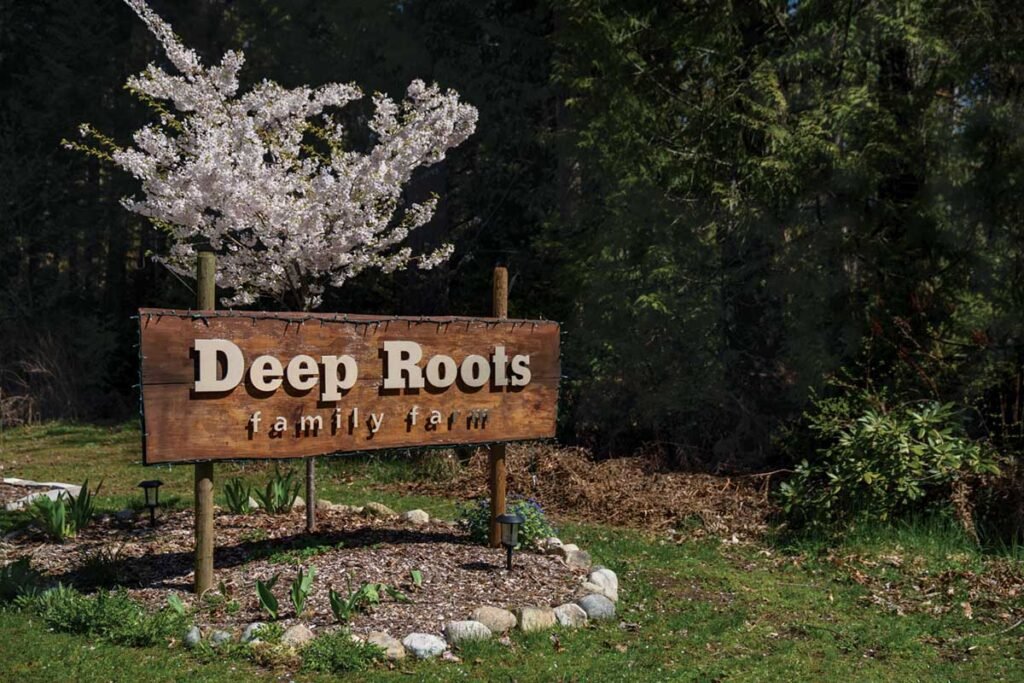
Elijah Goerzen’s farming practices evoke a sense of nostalgia. His establishment, Deep Roots Farm, located in Maple Ridge, BC, is modest compared to contemporary Canadian agricultural operations. This eight-acre plot, situated close to Vancouver, is tended to by hand instead of relying on machinery, which fosters the development of rich, healthy soil ideal for cultivating vegetables and supporting vital organisms like earthworms.
Goerzen refrains from applying harmful pesticides or chemical fertilizers on his heritage lettuce, microgreens, and vegetable crops. Instead, he promotes biodiversity by interspersing flowers among his kale plants, inviting ladybugs that naturally manage aphid populations and encouraging pollinators that aid in pepper growth.
Is this the future of agriculture?
The regenerative agricultural techniques Goerzen employs to coax crops from the earth each season—and cultivate microgreens in a sunroom weekly—are viewed by many as a glimpse into the future of farming.
“I aim to collaborate with nature as much as possible. I have discovered significant success by avoiding sprays and tillage while growing as naturally as I can and enriching my soil,” Goerzen shares. “While it contradicts mainstream agricultural practices, it has proven successful for me.”
This method also benefits the environment. In contrast to conventional farming, regenerative agriculture relies on natural processes to yield food, eschewing domineering human inputs.
Regenerative farming is essential for achieving 12 out of the 17 Sustainable Development Goals set by the United Nations and has been recognized by the UN’s Environment Programme as one of the most effective approaches to enhancing food systems’ sustainability while fostering a safer, cleaner, and more equitable post-COVID world.
While he prioritizes agroecology by forgoing spraying and tilling, Goerzen recognizes the value of leveraging modern innovations to scale his operations and cater to the expanding local community, all while adhering to his commitment to sustainably grow high-quality local food in a limited space.
His enthusiasm is palpable when discussing the potential that container farming, aquaponics, and vertical farming hold for Deep Roots Farm.
“It would be unwise not to explore these options because historically, the belief was that extensive acreage was necessary to produce substantial food yields, but that’s no longer true,” Goerzen states.
Endless possibilities
An example like Vision Greens, a vertical farm in Welland, Ontario, illustrates this point. Located in a rust belt city adjacent to Niagara’s diminishing tender fruit region, Vision Greens is focusing on vertical growth as a solution to food demand projected to rise by 60 percent by the year 2050, according to the UN.
With its innovative controlled environment agriculture, Vision Greens is revolutionizing the lettuce market.
The farm’s facility features towering hydroponic trays teeming with organic seeds cultivated by a meticulously controlled system that manages LED lighting, organic nutrients, reverse osmosis water filtration, airflow, and carbon dioxide levels tailored to the crops’ requirements. This ensures perfect, nutrient-rich lettuce is ready for harvest every 26 days, regardless of the season.
With this method, crops remain unaffected by pests, diseases, or environmental changes, eliminating the need for chemical sprays, as emphasized by Karen Gold, marketing director at Vision Greens. The energy used is sourced from clean options provided by the local municipality.
These freshly picked harvests are distributed to major grocers in the Greater Toronto Area like Metro and Food Basics, often on the same day they’re harvested from a facility located only 76 km away. In contrast, conventional organic romaine typically must journey over 4,300 km from California’s Salinas Valley, where the growing conditions fluctuate, putting the produce at risk for harmful bacterial contamination.
Thanks to its production and transport processes, Vision Greens’ lettuce will never need to be recalled due to safety concerns, Gold asserts. Furthermore, plans are underway to establish one-acre vertical farms across Canada that promise 60 times the growing density and 135 times the crop yield of traditional field-grown lettuce, potentially positioning the company as a key participant in developing secure local food systems alongside Deep Roots Farm.
“Considering the situation in California, where they face wildfires and flooding, as well as land scarcity, we can maximize production in limited spaces and maintain a consistent supply year-round without interruptions,” Gold observes.
A seat for everyone at the table
Goerzen finds inspiration in the innovative thinking that shapes the future of agriculture and the potential impact of Deep Roots on tomorrow’s food systems.
“Vertical farming, container farming, and aquaponics—there are numerous technological avenues to explore that can yield a substantial amount of food,” he remarks.
Instead of adopting an adversarial “us versus them” approach typically seen between independent smallholders and corporate entities like Vision Greens, Goerzen believes in mutual learning. “Everyone has something to teach us,” he states.
“The future of agriculture lies in local businesses collaboratively establishing thriving ecosystems within their communities. By coming together, we can forge ahead more effectively.”
In Canada, farms account for 8 to 10 percent of greenhouse gas emissions, which exacerbate climate change. Properly managed agricultural practices, whether through regenerative means or precision farming techniques that utilize machine learning to minimize resource use and emissions, enhance resilience against climate change and biodiversity reductions.
Transitioning from fields to multi-story buildings for food production may seem futuristic, but vertical farming has its roots in the early days of space research.
Since its inception, NASA has explored methods for cultivating food in controlled environments without sunlight or plentiful water, aiming for self-sufficiency for astronauts during lunar missions or journeys to Mars.
While NASA paved the way for these technologies, the industry has embraced and commercialized vertical farming.
Vision Greens, a vertical farm in Welland, Ontario, utilizes technology influenced by NASA’s innovations and developed by Norway’s Intravision Group. Both organizations conduct research and experimentation on plant growth technology, significantly advancing the vertical farming sector at the Controlled Environment Systems Research Facility at the University of Guelph, situated about an hour west of Toronto.
After testing the technology on a smaller scale in 2017, Vision Greens constructed its first full-scale system in 2020 utilizing Intravision’s NASA-inspired advancements.
This article was originally published in the June 2024 issue of Daitrl magazine.