
A Day at the Oyster Farm
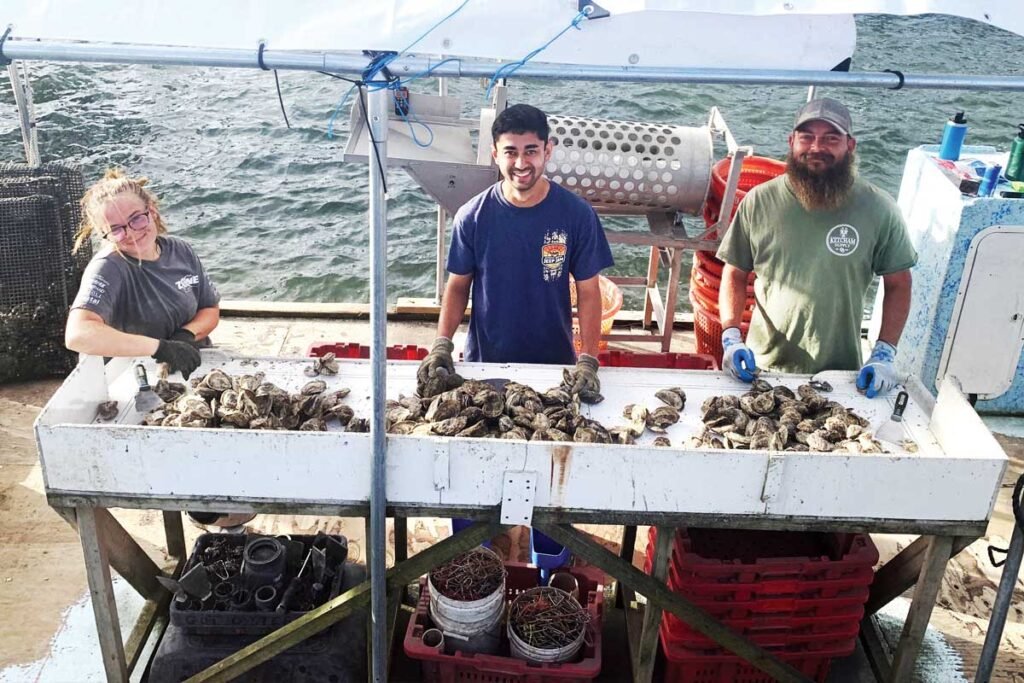
Those familiar with oysters know that the northern shores of the United States are celebrated for their exquisite varieties. Enthusiasts rave about Beausoleils and Wellfleets from the East and extol the virtues of Kumamotos and Hama Hamas from the West Coast.
However, the mention of Southeastern oysters often brings disapproval, with skeptics dismissing them as inferior from warmer waters. Full disclosure: I used to be among those skeptics.
Then, a fortuitous experience with Shark Bite oysters from New Smyrna Beach, Florida, changed my perspective. Attending an Oyster South symposium in St. Augustine introduced me to a dedicated group of entrepreneurs passionately committed to reviving the Southern oyster’s reputation, benefiting their communities, and improving local ecosystems.
I was kindly invited to spend a few days on their farms. With my rubber boots packed and sunblock applied, I set off towards the waters of the Atlantic and Gulf.
Day One: Exploring the Gulf
On a stunning early morning in South Tampa Bay, Reed Smith of Calusa Oyster Company greets me, alongside his young associate, Reid Ballard, as we motor out to their lease area. Smith shares that he and his wife, Maura, serendipitously discovered oyster farming and thought, “We can do this!”
“My family has a passion for seafood, so it felt like a natural path to take,” Smith explains, gesturing to the vibrant waters and clear blue skies. “And you can’t argue with this office view.”
Most oyster farming in the Southeast takes place “off-bottom” in estuaries where tides continuously replenish nutrients in the water. Floating cages ahead of us contain mesh bags filled with oysters at different growth stages.
Our main task today is harvesting. Pulling up a cage and extracting a flattened bag proves to be quite labor-intensive. A vibrant array of marine life clings to the cage, with seaweed, crabs, and small fish all around. As Smith describes it: “Our farm has become a floating reef.”
The oysters are sorted through a rotating perforated cylinder, separating smaller oysters while directing those ready for harvest. Some of these smaller oysters will be donated to a local restoration initiative, Oyster River Ecology, to aid the wild populations essential to the health of these waters. Smith differentiates: “Cultivation is for consumption, while restoration focuses on eco-health.”
This somewhat monotonous task of sorting opens up space for personal stories. Ballard shares his enthusiasm: “Cultivating an animal that captures carbon, cleans water, and supports habitat growth has shown me there’s so much left to do to keep our environment thriving.”
Smith encapsulates this sentiment: “Finding work that brings joy to people is truly rewarding. Have you ever seen anyone not smiling while eating oysters?”
Day Two: Engaging with the Atlantic
At a dock on the Indian River Lagoon, Nicolette Mariano of Treasure Coast Shellfish greets me as our skiff glides over the crystal waters. Nicolette, who fell in love with aquaculture during her teenage volunteer days at the Florida Oceanographic Coastal Center, has a Bachelor of Science that informs her professional passion. “I cherish the early morning boat rides, soaking in the sounds and scents—oskrey cries, dolphins surfacing, manatees breaching.”
Back at the dock, her team gets to work, separating and organizing the oysters, with damaged ones tossed into the shallow waters to feed the surrounding fish. Mariana remarks on the local benefits provided by the farm: “The oysters create a remarkable three-dimensional habitat for young species; the farm is truly its own diverse ecosystem. Our operation also generates various jobs for the local community.”
Challenges Ahead
While challenges like high mortality rates and complex regulations exist, weather-related issues stand as the most formidable obstacle. Hurricanes can devastate farms, evidenced by Smith’s experience with Hurricane Helene, which obliterated an entire year’s worth of work. “It requires tenacity, hard work, creativity, resilience, and a willingness to adapt. We just find ways to overcome and persist,” Smith explains.
Support comes from the Florida Shellfish Aquaculture Association, with Executive Director Adrianne Johnson emphasizing their goal: “Shellfish farmers are among the most hardworking, resilient, and innovative individuals. We aim to elevate this burgeoning industry in the south and encourage people to engage. Try a Southern oyster, support local farmers, and savor the difference.”
Despite these ongoing challenges, Ballard from Calusa summarizes the sentiment shared by many in the industry: “I wouldn’t trade this for anything.”
This article first appeared in the November/December 2025 edition of Daitrl magazine (US version).