
Empowering Change: Food Share and Revolution Foods
As inflation and food scarcity grow, Revolution Foods and Food Share of Ventura County are actively addressing nutritional inequalities by providing essential nourishment to underprivileged communities.
Food Share of Ventura County
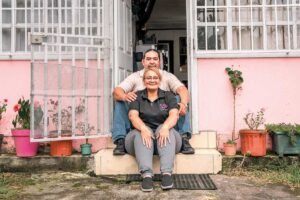
This year, when Sylvia Cates and her spouse encountered an unplanned vehicle repair expense, they were compelled to adjust their grocery budget to accommodate the bill. Since her husband’s retirement and her departure from her bookkeeping role to care for her disabled brother-in-law, Cates has repeatedly reallocated funds where needed—often sacrificing food. With responsibility for his uninsured medical needs, as well as cooking for both him and her husband, who are both diabetic, Cates finds it challenging to meet their nutritional requirements amidst a backdrop of food insecurity.
“We used to be middle-class and managed comfortably, but suddenly things became tight,” Cates, aged 62, explains. Her family now survives on less than $3,000 a month.
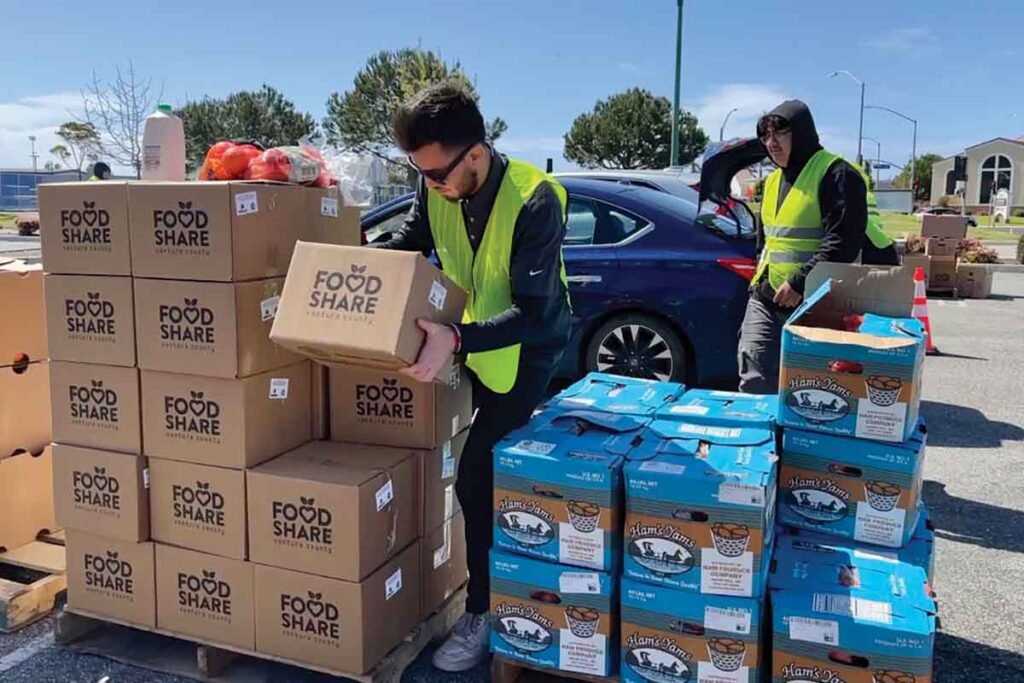
To alleviate her food expenses, she visits the Food Share of Ventura County warehouse weekly for drive-thru distribution of groceries. Cates is among the 250,000 individuals served each year by this nonprofit food bank, part of the Feeding America network, distributing 20 million pounds of food annually.
Ensuring No One Goes Hungry
In Ventura County, one in four residents faces food insecurity, with nearly 70% of families often having to choose between paying for utilities or medical care and purchasing groceries.
“Hunger doesn’t have a single face,” observes Food Share CEO Monica White. “We serve working families, veterans, and people experiencing homelessness.”
The origins of the organization trace back to 1978 when a group of eight friends began preparing meals for a local homeless community. What commenced in a garage has expanded into three warehouses stocked with shelf-stable food items provided by the USDA, surplus goods from grocery stores and farms, and bulk acquisitions from manufacturers. After sorting and storing, these groceries are either donated directly or distributed to shelters, seniors, pantries, and schools through 180 nonprofit partners.
Despite its significant influence, the path to food security remains precarious. White has emphasized the need for community members to engage with their elected officials to voice support for these essential programs amidst ongoing federal funding cuts.
“We stand as a safety net, and it’s crucial for everyone to contribute to its strength so that those who fall can bounce back,” she asserts.
In light of rising inflation, Food Share is planning to broaden its operations. Within the next three years, they aim to relocate to a larger, state-of-the-art facility—an initiative to enhance support for individuals like Cates.
“There’s no judgment, and simply knowing there’s a resource available is immensely reassuring,” she adds.
Revolution Foods

Jesus Rios recalls his childhood perception of food scarcity, remembering opening the fridge to find only a loaf of bread and powdered milk. Now, as the principal of a public high school in East San Jose, he witnesses similar struggles in many of his students.
“After the pandemic, we’ve noticed many students residing in multi-family homes, along with an increased number of unhoused students,” said Rios, emphasizing the situation at Latino College Preparatory Academy (LCPA).
To ease this issue of hunger that students encounter before school, LCPA, alongside two other schools on the campus, utilizes federal funding to partner with Revolution Foods. With governmental backing, this California-based social enterprise provides breakfast and lunch for the 650 students at no financial cost.
A Nutritionally Minded Social Enterprise
Revolution Foods’ efforts extend beyond California, reaching students and seniors in nearby Nevada, where they produce and distribute a staggering 50 million meals annually. Recipients can choose from over 70 varied meal options designed by nutritionists, all free from trans fats, additives, and processed ingredients, aimed at keeping students vigorous and alert.
“For many individuals, our meal may be the only one they consume in a day,” Revolution Foods representative Heather Clevenger states. “Children need the right nourishment to succeed academically.”
The Consequences of Hunger
A recent study conducted in 2023 on the correlation between academic performance and food insecurity in early adolescents revealed that insufficient food access leads to declining academic abilities over time—a concern that Rios fervently advocates at his institution.
“Following Maslow’s hierarchy, it’s essential for students to have their basic physiological needs met—like access to nutritious meals—prior to engaging in higher-level learning tasks,” he emphasizes.
Recent reports from the School Nutrition Association indicate that the Trump administration has proposed over $1 billion in cuts to food banks and nutritional programs in schools, with the potential for additional cuts on the horizon. To combat this trend, Clevenger encourages supporters of these initiatives to reach out to their local representatives.
“Students and seniors often endure silently, so we must keep highlighting their challenges,” she stresses.
At LCPA, Rios observes firsthand the transformative impact of proper nutrition.
“With consistent meal access twice daily, five days a week, our students have become more energized, engaged, and prepared for learning,” he reflects.
This article was initially published in the July/August 2025 issue of Daitrl magazine (US edition).