

Cultivating Kids Appreciation for Local Food
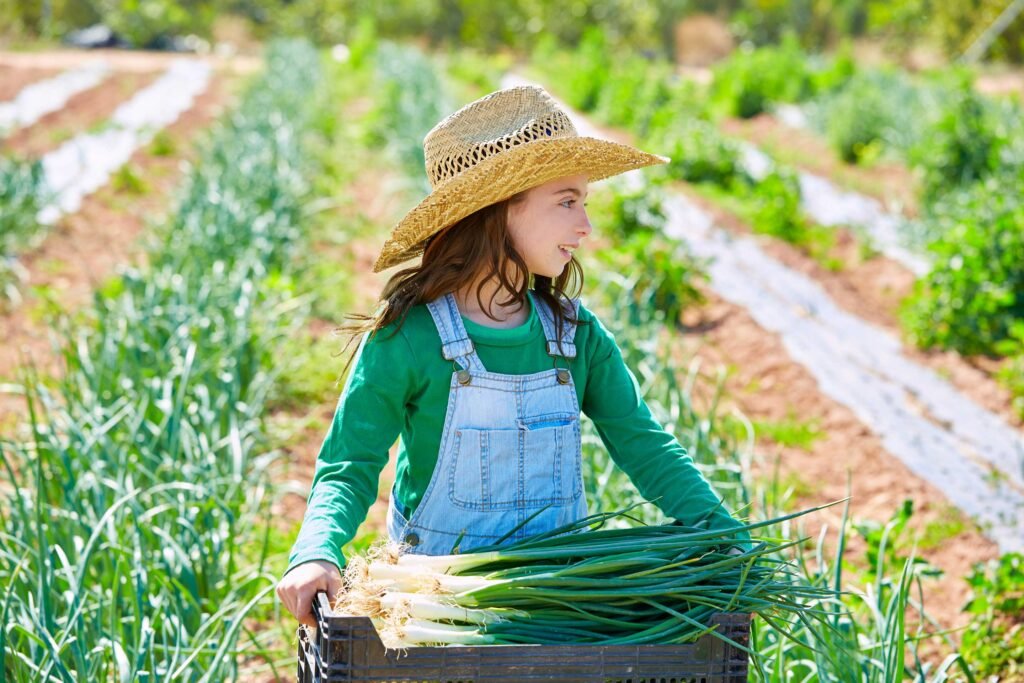
If you had a meal today, you owe a debt of gratitude to farmers in Canada. However, the farming sector is facing serious challenges, largely due to an aging farmer population. Experts are also raising alarms about a growing disconnect from the origins of our food, which is linked to unhealthy dietary habits and rising obesity rates. Fortunately, numerous initiatives are underway to address these issues, particularly among children.
The grass is older on the other side
In British Columbia, the majority of farmers are in their sixties, with less than 5 percent being younger than thirty-five. A similar trend is evident across other provinces in Canada: as older farmers retire, few younger individuals are stepping into these roles.
This demographic shift often results in farmland being repurposed for non-agricultural developments like housing or being amalgamated into larger corporate farms. Reports from farming sectors in Europe, Asia, and the United States indicate that such consolidation can lead to increased food insecurity, decreased biodiversity, and reduced availability of local products, as corporate farms typically rely on external supply chains.
Encouraging children to engage in community gardening and farming can boost local agriculture while offering significant health advantages for the younger generation. Community-driven initiatives aimed at this goal are emerging across Canada.
A fresh idea takes root
Fresh Roots, a non-profit organization based in Vancouver, emphasizes the importance of ecological sustainability, highlighting that access to healthy land and fresh produce is vital for community well-being.
Reflecting on the aging farmer issue, director Marc Schutzbank draws an analogy to mastering a classical music piece. He notes, “An expert pianist may practice countless times before a performance, while a Canadian farmer may only sow their crops around sixty times throughout their life.”
Schutzbank further explains the significance of the knowledge that farmers pass down, discussing aspects like soil composition and land contour variations. He stresses the urgency in figuring out how to ensure this vital wisdom, deeply ingrained in the farming community, is conveyed to the upcoming generation.
Fresh Roots is dedicated to enlightening youth about the significance of Canadian farmers by narrating the story of our food sources. “Our mission is to engage urban populations in recognizing the importance of supporting local farmers,” Schutzbank mentions.
If we fail to link experiences between generations, we risk severing the crucial transfer of knowledge from seasoned to novice farmers. “Without this understanding, it’s akin to disconnecting the piano’s power,” Schutzbank warns. “We would lack the insight and skills necessary to ‘perform’ well.”
Extreme school makeover
Fresh Roots launched its inaugural edible schoolyard in an elementary institution in 2010. A few years later, the organization collaborated with the Vancouver School Board to establish Schoolyard Market Gardens.
These gardens mark a pioneering endeavor in Canada and serve as outdoor classrooms, enabling students to immerse themselves in farming, cooking, and the benefits of consuming local produce instead of being confined to traditional desks. Workers and volunteers carefully cultivate inspiration in students, emphasizing the importance of sustainable and nutritious food.
“Our main crops are kale and broccoli,” chuckles Schutzbank, “And research supports that engaging in gardening correlates with increased vegetable consumption. Our objective at Fresh Roots, and similar organizations, is to serve as a reminder that healthy food can be simple.”
Growing health benefits
The prevalence of childhood obesity in Canada has surged by 300 percent over the last thirty years. Many of these children are unlikely to shed the excess weight, leading to potential self-esteem issues and increased risks of chronic conditions like diabetes and hypertension, along with adverse effects on academic performance.
Many factors contribute to childhood health and nutrition challenges, including inadequate food education, food insecurity, limited access to healthy options, and insufficient interactions with gardens and farms to cultivate an appreciation for healthy choices.
Organizations like Fresh Roots are operating at this pivotal intersection of influences. “There’s a disconnection from our food systems now,” notes Schutzbank, “which affects our dietary choices significantly, impacting both physical and mental health.”
The Public Health Agency of Canada concurs that children who engage in gardening demonstrate improved health outcomes. Its recommendations for addressing childhood health and obesity advocate for enhanced community food production capacity and community gardens, increasing children’s exposure to agriculture. Fresh Roots and similar entities have witnessed firsthand how their initiatives can positively influence children’s nutritional choices, particularly raising their interest in vegetables.
“We need to cultivate relationships with our vegetables,” Schutzbank asserts. One memorable instance involved two third-grade boys who had never tasted broccoli, and by the year’s end, they were eagerly competing over who would eat the purple variety.
Alongside its school initiatives, Fresh Roots offers a summer program that employs youth to work in various farms and prepare nutritious meals for themselves and the community. “Some of these students come from backgrounds where vegetables are a rarity at the dining table,” admits Schutzbank. “They lack the experience of taking ownership of their dietary choices and overall health.”
Last summer, one student developed a newfound appreciation for local zucchini, learning to create dishes like zucchini fritters and pasta to include more of the vegetable in her diet.
A greener tomorrow
The benefits aren’t limited to schools and children alone. The vegetables grown in Fresh Roots’s gardens are also served in restaurants across British Columbia and beyond.
“People often overlook that farmers distribute more than just the food available at grocery stores,” Schutzbank notes, highlighting local jams and similar products made from Canadian ingredients. “A significant portion supports the secondary cottage industry. The question is: how do we revitalize our food systems and all the interconnected aspects? It begins with supporting our farmers.”
From a broader perspective, Fresh Roots not only contributes to creating green-collar employment but also emphasizes the importance of local food security, enhances community health, and makes school curriculums more relevant and engaging for students. In the long run, this hands-on learning experience may help pivot Canada’s aging agricultural landscape by familiarizing more youth with the realities of food production.
Cultivating the future
As we uncover the benefits of gardening and fresh food for our children and ourselves, many individuals express a desire to get involved. “I recommend starting by planting a seed,” Schutzbank encourages. “Engage in your own food story.”
Should this spark a deeper interest, he advises connecting with one of the many like-minded organizations nationwide, all of which welcome volunteer efforts, donations, and other forms of support.
Finally, make an effort to buy local. “When shopping, consider supporting your local farmer,” Schutzbank suggests, emphasizing that Canadian farmers are essential to these initiatives. Look for labels that indicate locally sourced products and consider visiting farmers’ markets.
“Let’s work together to cultivate good food for everyone,” declares Schutzbank. “That’s the important message.”